





Deck Framing Guide A Complete Expert Walkthrough for Building a Strong and Lasting Deck
Building a deck is one of the most rewarding home improvement projects you can take on. It adds functional outdoor space, increases property value, and creates a perfect area for relaxation or entertaining. But before you ever think about laying down beautiful deck boards, the real foundation of a successful project begins underneath—with proper framing. A solid deck framing guide is not just helpful; it is essential if you want your deck to be safe, durable, and built to last for years.
Many people underestimate how critical framing is, often focusing only on aesthetics. However, the structural integrity of your deck depends entirely on how well the framing is planned and executed. From understanding load distribution to choosing the right materials and spacing, every decision matters. This deck framing guide will walk you through every detail in a practical and expert way, helping you avoid costly mistakes and build something you can truly rely on.
Understanding the Basics of Deck Framing
Before diving into tools and techniques, it’s important to understand what deck framing actually involves. In simple terms, deck framing is the skeleton of your deck. It supports everything above it, including decking boards, railings, furniture, and people. Without a properly constructed frame, even the most beautiful deck surface will fail over time.
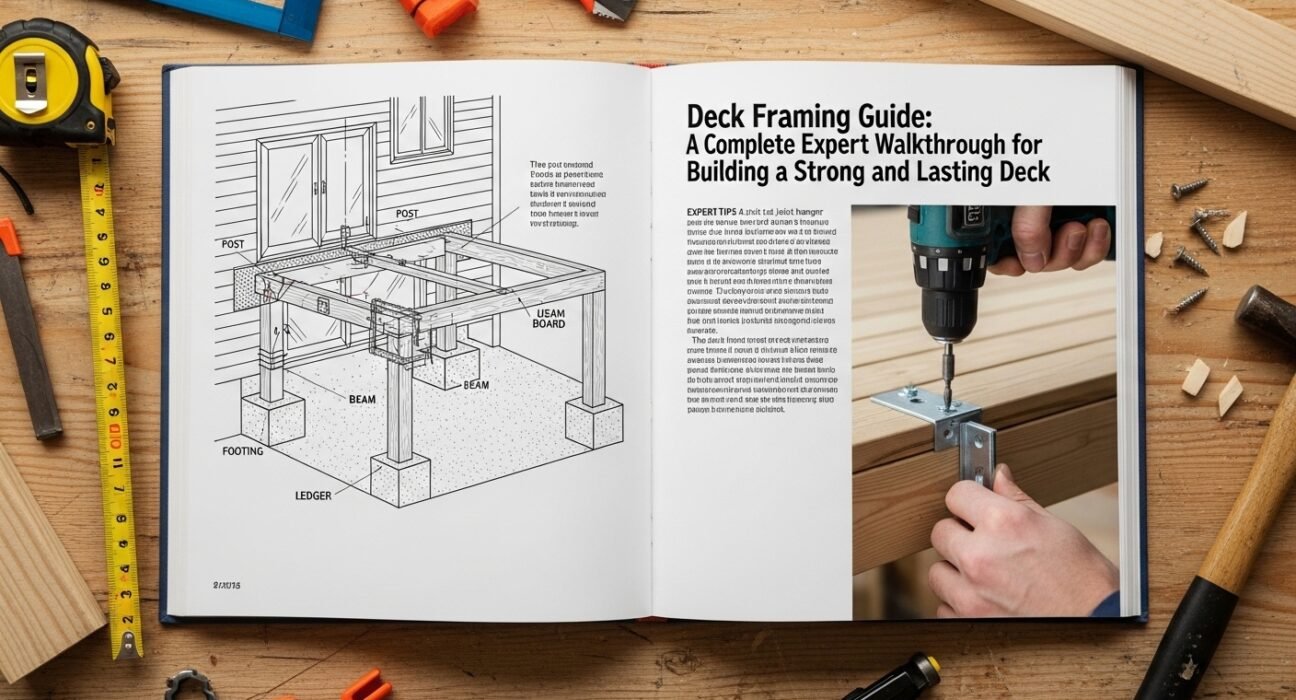
A well-structured deck framing guide always begins with the core components. These include the ledger board, beams, joists, posts, and footings. Each of these elements plays a specific role. The ledger board attaches the deck to your house, beams carry the load horizontally, joists distribute weight evenly, and posts transfer that weight to the ground through footings. Understanding how these parts work together helps you build with confidence rather than guesswork.
Another important concept is load management. Your deck must support both live loads and dead loads. Live loads include people, furniture, and movement, while dead loads refer to the weight of the structure itself. A proper deck framing guide ensures that your frame is designed to handle both safely. Ignoring this aspect can lead to sagging, instability, or even structural failure.
Planning Your Deck Frame the Right Way
Planning is where most successful deck projects are made or broken. A thorough deck framing guide emphasizes careful preparation before any physical work begins. This stage involves measuring your space, deciding on deck size, and ensuring compliance with local building codes.
Start by visualizing how you want your deck to function. Think about traffic flow, furniture placement, and access points. These factors will influence your framing layout. A deck that looks good but feels cramped or awkward is usually the result of poor planning. Taking time at this stage ensures your deck will be both practical and comfortable.
Equally important is checking local regulations. Building codes often dictate things like beam spacing, joist size, and footing depth. Ignoring these requirements can lead to serious issues down the line, including fines or forced reconstruction. A reliable deck framing guide always incorporates code compliance as a foundational step.
Choosing the Right Materials for Deck Framing
Material selection plays a huge role in the strength and longevity of your deck. A professional deck framing guide will always recommend using high-quality, pressure-treated lumber for structural components. This type of wood is specifically designed to resist moisture, rot, and insect damage.
Not all wood is created equal, and choosing the wrong type can compromise your entire project. Pressure-treated lumber is commonly used because it offers durability at a reasonable cost. However, you can also consider engineered wood or steel framing for enhanced performance, especially in areas with extreme weather conditions.
Fasteners are just as important as the wood itself. Nails, screws, and connectors must be corrosion-resistant, especially when working with treated lumber. Using incompatible fasteners can lead to chemical reactions that weaken the structure over time. A detailed deck framing guide always stresses the importance of using the right hardware to match your materials.
Setting the Foundation with Proper Footings
Every strong deck starts from the ground up, and footings are the literal foundation of your structure. A reliable deck framing guide will emphasize that skipping or rushing this step is one of the biggest mistakes you can make. Footings anchor your deck and distribute its weight safely into the soil.
The depth and size of your footings depend on several factors, including soil type, climate, and deck size. In colder regions, footings must extend below the frost line to prevent shifting during freeze-thaw cycles. In softer soil, wider footings may be necessary to provide stability.
Concrete is typically used for footings because of its strength and durability. Properly poured and cured concrete ensures that your deck remains stable over time. A well-prepared deck framing guide will always include detailed instructions for digging, pouring, and setting footings correctly.
Installing Posts and Beams for Structural Support
Once your footings are in place, the next step in any deck framing guide is installing posts and beams. These components form the primary support system of your deck. Posts transfer weight vertically to the ground, while beams distribute that weight horizontally.
Posts should be securely anchored to the footings using metal brackets or connectors. This prevents movement and protects the wood from direct contact with moisture. A common mistake is placing posts directly into concrete without proper protection, which can lead to premature decay.
Beams are typically constructed by layering multiple boards together to create a strong, load-bearing element. Proper alignment and fastening are critical here. A comprehensive deck framing guide will always highlight the importance of ensuring beams are level and securely attached to posts.
Understanding Joist Layout and Spacing
Joists are the horizontal members that support your decking boards, and their layout is a crucial part of any deck framing guide. Proper spacing ensures that your deck surface remains stable and does not sag over time.
Standard practice involves spacing joists evenly to distribute weight effectively. However, spacing can vary depending on the type of decking material you plan to use. Thicker boards may allow for wider spacing, while thinner materials require closer support.
Another important consideration is alignment. Joists should be installed straight and level, with consistent spacing throughout. Even small variations can create uneven surfaces that become noticeable once decking is installed. A good deck framing guide always stresses precision at this stage.
Attaching the Ledger Board Safely
The ledger board is one of the most critical components in a deck framing guide, especially for decks attached to a house. It connects your deck to the main structure and must be installed correctly to ensure safety.
Proper attachment involves securing the ledger board directly to the house framing, not just the exterior siding. This often requires removing a portion of the siding to access the structural framing beneath. Using lag screws or bolts ensures a strong connection.
Waterproofing is equally important. Flashing should be installed to prevent water from seeping behind the ledger board, which can lead to rot and structural damage. A professional deck framing guide always includes detailed steps for sealing and protecting this connection.
Adding Blocking and Bracing for Stability
Blocking and bracing are often overlooked, but they play a vital role in strengthening your deck frame. A complete deck framing guide will always include these elements to enhance stability and prevent movement.
Blocking involves placing short pieces of wood between joists to keep them aligned and prevent twisting. This is especially important in larger decks where joists span longer distances. Without blocking, joists can shift over time, compromising the structure.
Bracing adds diagonal support to prevent lateral movement. This is particularly important in elevated decks where wind or movement can cause swaying. A well-executed deck framing guide ensures that your deck feels solid and secure under all conditions.
Preparing for Decking Installation
Once your frame is complete, it’s time to prepare for the next phase. A proper deck framing guide doesn’t stop at structure—it ensures the frame is ready for decking installation.
This involves checking that all components are level, square, and securely fastened. Any issues at this stage will be magnified once decking boards are installed. Taking the time to make adjustments now saves effort later.
It’s also a good idea to apply protective treatments to your frame if needed. While pressure-treated wood is durable, additional sealing can extend its lifespan. A detailed deck framing guide will always recommend steps to protect your investment.
Common Mistakes to Avoid in Deck Framing
Even with a solid deck framing guide, mistakes can happen. Being aware of common pitfalls helps you avoid them and ensures a smoother building process.
One of the most frequent errors is improper spacing. Whether it’s joists, posts, or beams, incorrect spacing can lead to structural weakness. Always double-check measurements and follow recommended guidelines.
Another common mistake is neglecting moisture protection. Water is one of the biggest threats to deck longevity. Failing to install flashing or using untreated materials can lead to rot and costly repairs. A good deck framing guide always prioritizes moisture management.
Maintaining Your Deck Frame Over Time
Building your deck is only the beginning. A complete deck framing guide also covers maintenance to ensure long-term performance. Regular inspections can help you identify issues before they become serious problems.
Check for signs of wear, such as loose fasteners, cracks, or moisture damage. Addressing these issues early can extend the life of your deck significantly. Even well-built structures require occasional upkeep.
Cleaning and sealing your deck frame periodically can also help protect it from the elements. While much of the frame is hidden, it still benefits from proper care. A thoughtful deck framing guide always includes maintenance as part of the overall process.
Final Thoughts on Following a Deck Framing Guide
A well-executed deck framing guide is the backbone of any successful deck project. It ensures that your structure is not only visually appealing but also safe, durable, and built to withstand the test of time.
Taking the time to understand each step—from planning and material selection to installation and maintenance—makes a significant difference in the final result. While framing may not be the most visible part of your deck, it is undoubtedly the most important.
Approach your project with patience, attention to detail, and a commitment to doing things right. With the knowledge from this deck framing guide, you are well-equipped to build a deck that you can enjoy for years to come.